How to estimate carbs from a photo (and where your eyes lie)
The first week Audrey was home from the hospital, I weighed everything.
Grapes, one by one, on a little kitchen scale. A half-cup of Cheerios measured into a bowl like I was filling a prescription. I sliced her banana and weighed the peel separately so I could subtract it. My wife watched me do this and said, very kindly, "You know we can't do this at a birthday party."
She was right. You can't pack a gram scale into your kid's lunchbox. You can't pull one out at a pizza party while the other kids are already on their second slice. At some point, carb counting stops being a lab exercise and starts being an educated guess — and the goal is just to make your educated guesses as good as possible.
That's what this post is about. Not perfection. Just: what actually helps, what trips you up, and what a photo can and can't tell you.
The first trick your eyes play: portion size
Here's something nobody warned me about. The same amount of food looks dramatically different depending on the plate it's on. A cup of pasta spread across a wide, shallow bowl looks like a modest side dish. That same cup piled into a smaller, deeper bowl looks generous — almost too much.
Round plates make mounds of food look smaller than they are. White plates make lighter-colored foods — rice, mashed potatoes, pasta — basically disappear against the background. Dark plates make portions look bigger.
None of this is a conspiracy. It's just how human vision works. But when you're trying to count carbs from a glance or a photo, those visual illusions have real consequences.
The single most reliable thing I've found: anchor to something you know. A standard dinner plate is about nine inches across. A juice glass holds roughly four ounces. A pat of butter is about a teaspoon. When you have a fixed reference point in the frame, everything else becomes easier to judge.
Hand-portion shortcuts that actually hold up
Before apps and before AI, diabetes dietitians taught something called the hand method. Your own hand scales roughly to your own body — which makes it a surprisingly portable measuring tool. Here are the ones we actually use:
- A closed fist ≈ 1 cup. That's roughly 45g of carbs for cooked pasta or rice, about 30g for most cereals.
- A cupped palm (like you're holding water) ≈ ½ cup of cooked grains or starchy vegetables — roughly 15–20g of carbs.
- A flat palm (no fingers) ≈ a 3-oz protein serving — nearly zero carbs, but helpful for understanding what's actually on the plate.
- A thumb tip to first knuckle ≈ 1 teaspoon — useful for honey, jam, or sugar added to something.
- Two cupped hands together ≈ 1 cup of fruit, which is around 15–20g depending on the fruit.
These aren't exact. For Audrey's specific ratios and correction factors, we always defer to her team at the Barbara Davis Center — not a rule of thumb. But as a rough map of what's on the plate, hand portions are genuinely useful, especially in situations where a scale isn't an option.
The second trick your eyes play: hidden carbs
Some foods are what I'd call carb icebergs. What you see on top doesn't reflect what's actually there.
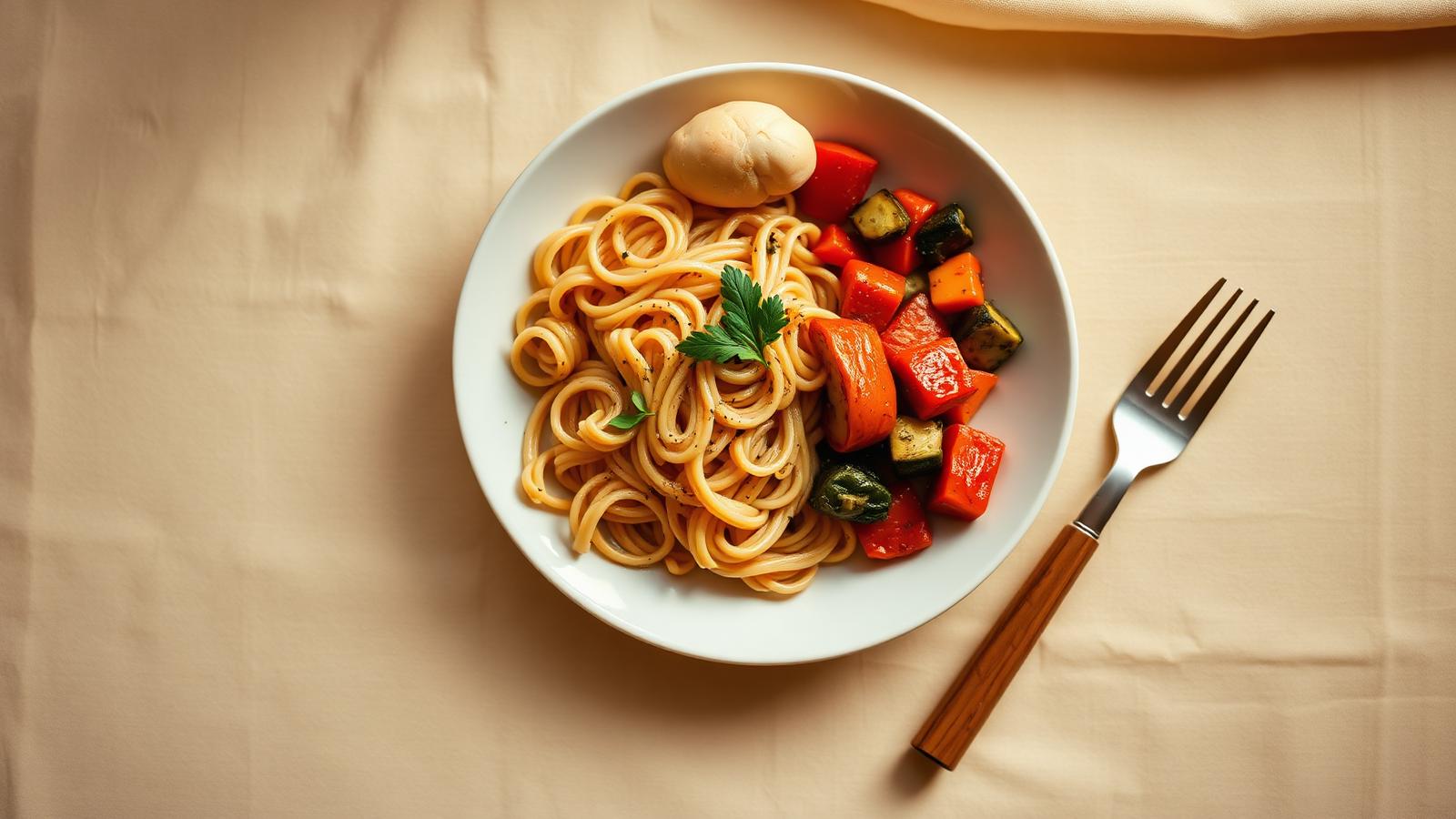
Pasta is the classic example. Dry pasta is dense. Once it cooks, it absorbs water and puffs up — so a portion that looks like a lot on the plate might have started as just a small handful of dry noodles. But two cups of cooked spaghetti is still around 80–90 grams of carbs. The volume doesn't shrink the carbs; it just makes them look less scary.
Sauces are sneakier. A ladleful of marinara might add 10–15g. A sweet teriyaki glaze can add more. Anything with the word "glaze," "sweet," or "honey" in the name is worth a second look. From a photo, you can often see that a dish is sauced — but you can't see the sugar content of the sauce itself.
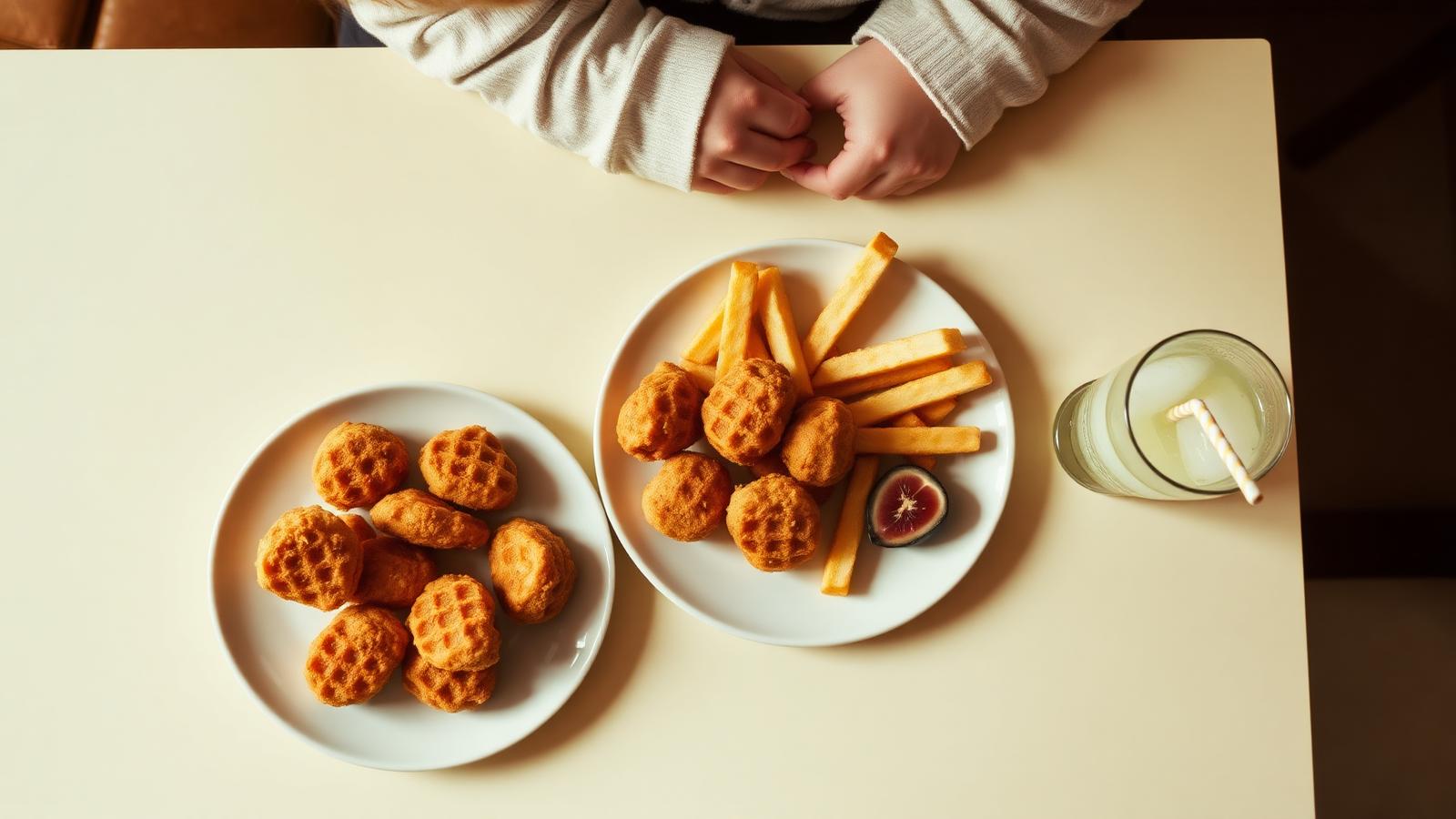
Breading and coatings on chicken tenders, fish sticks, or fried vegetables add up faster than you'd think — often 10–15g per serving, sometimes more. They're easy to miss when the visible part of the dish looks mostly like protein.
Drinks don't show up in meal photos at all, and juice, flavored milk, and sweet tea can carry as many carbs as the food on the plate. This one burned us early.
Why mixed dishes are a whole different problem
Separate foods are relatively forgiving. You can see the rice. You can see the broccoli. You can count the strawberries.
Mixed dishes — casseroles, soups, stews, stir-fries, burritos, pizza — are genuinely hard. Everything is layered or stirred together, and the carb-dense components (pasta, rice, beans, tortilla, crust) are often partially hidden under or inside the rest. Studies on carb counting accuracy consistently show that mixed dishes produce the widest error margins, even among experienced T1D adults. This is not a beginner problem. It's a structural one.
Restaurant food adds another layer of uncertainty. A pasta dish at one Italian restaurant might be 80g of carbs. The "same" dish at a different restaurant might be 130g, because the portions are larger and the sauce is sweeter. This is part of why eating out with a T1D kid is its own skill set — one we get into more in our post on navigating restaurants with a T1D kid.
For mixed dishes, the most useful approach is to try to mentally "unmix" the food. What's the starchy base — and how much of the plate does it cover? What's the protein? What's added on top? Thinking in layers, even if imperfectly, gets you closer than treating the whole bowl as a mystery.
What a photo actually helps with
A photo gives you a moment to slow down. Instead of making a snap call while your kid is already eating, you can look at the plate more deliberately — identify what's on it, notice the reference points (the plate size, the fork, the cup), and think through the components one at a time.
Photos are especially useful for logging. If you snap a shot before the meal, you have a record to look back at later — especially on days when the blood sugar response doesn't match your estimate. Over time, you start building a mental library: that's what 60 grams of mac and cheese looks like at this restaurant. That serving of birthday cake is about the same as last time.
That's exactly the gap CarbCue is designed to help with. You take a photo, and instead of doing all the mental math solo, you get a structured estimate with the components broken out — so you can review it, adjust it, and hand the refined number to your care team's dosing guidance. You can see how that process works on our how it works page.
What a photo can't do: see through the food. It can't tell you how much butter went into the mashed potatoes or how sweet the sauce is. It can't account for the juice your kid poured while you weren't looking. No estimate — photo-based or otherwise — is a substitute for knowing your child's patterns and staying in close contact with your diabetes care team about what's working.
You will get better at this
I know that might sound hollow when you're in the first month and every meal feels like a test you didn't study for. But it's true.
The research on T1D families bears this out: experienced caregivers make significantly more accurate carb estimates than newly diagnosed ones, not because they're smarter, but because they've seen the same foods hundreds of times. Audrey eats a lot of the same things. We know her favorite lunches cold. The mental library builds whether you're trying or not.
New foods are still humbling. We still get surprised by restaurant dishes and holiday spreads. But the baseline anxiety of "I have no idea what this plate contains" fades. You start to have a working model.
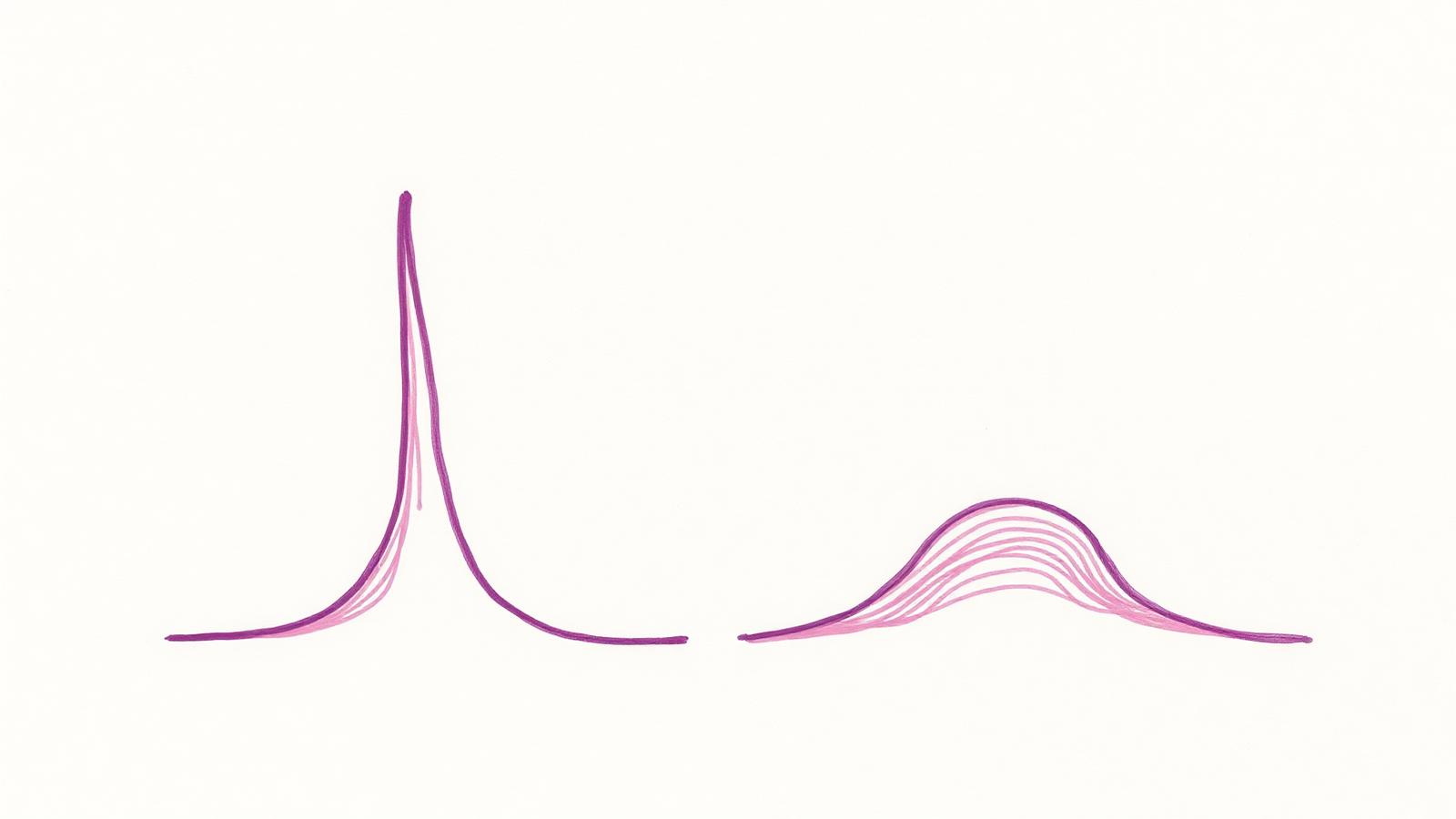
And if you want to understand more about what happens after you make your best estimate — how the number you gave connects to what her CGM shows two hours later — that's what our post on reading the shape of the curve is about.
If you're a T1D parent navigating the same learning curve, CarbCue was built for you. We're building an iOS app that estimates carbs from a meal photo and presents the components clearly — so you can refine the number, log it, and bring it to your care team. Join the waitlist and we'll let you know when early access opens.
✦ Get CarbCue at launch
Join the iOS waitlist
We're building CarbCue for families like ours. Drop your email and we'll let you know the moment it's on the App Store.